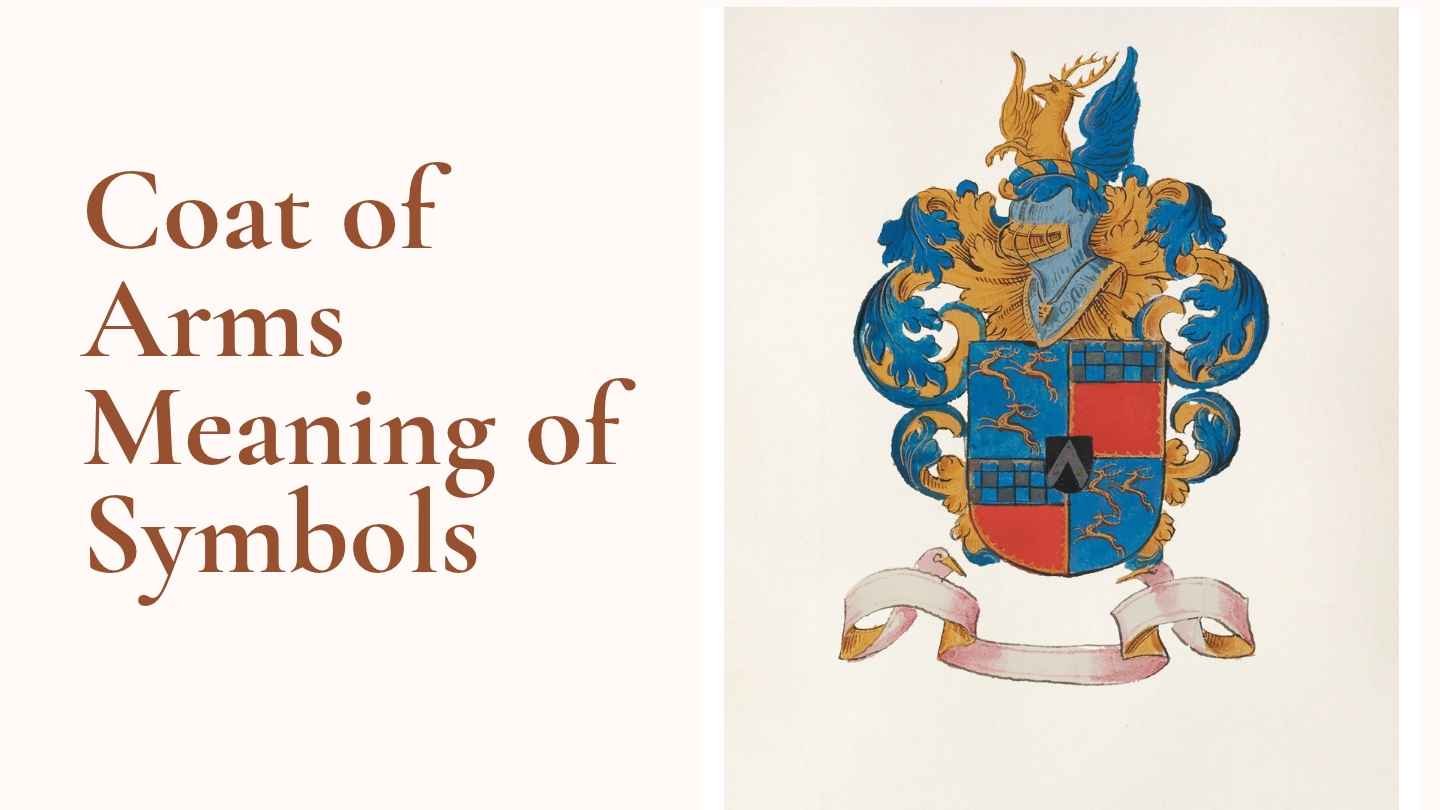
A coat of arms is much more than an old family emblem printed on shields, flags, or official documents. Every color, animal, shape, and object found on a coat of arms tells a story. For centuries, these symbols have represented bravery, loyalty, faith, honor, and identity.
Understanding the coat of arms meaning of symbols opens a fascinating window into history. Whether you’re researching your family heritage, studying heraldry, visiting castles in Europe, or simply curious about medieval traditions, learning how to read a coat of arms can reveal surprising details about people, kingdoms, and institutions.
Today, coats of arms continue to appear on government seals, universities, military insignias, and national emblems around the world. While their designs may look decorative, they were originally created as a visual language—one that could be understood even on a battlefield.
This guide explores the meanings behind common coat of arms symbols, their history, cultural significance, and how they continue to influence modern society.
Quick Facts and Overview

| Feature | Details |
| Origin | Medieval Europe (12th century) |
| Study of Coats of Arms | Heraldry |
| Primary Purpose | Identification and representation |
| Common Elements | Shield, crest, motto, supporters |
| Used By | Families, nobles, kingdoms, institutions |
| Popular Symbols | Lions, eagles, crosses, crowns, trees |
| Symbolism | Courage, loyalty, wisdom, strength, faith |
| Modern Usage | Government seals, universities, military organizations |
Background and Overview
A coat of arms is a unique heraldic design traditionally displayed on a shield. It was initially developed to identify knights during tournaments and battles when armor made facial recognition nearly impossible.
Over time, coats of arms evolved into symbols of lineage and authority. Kings granted them to noble families, cities, churches, and military groups. Eventually, they became hereditary and were passed from one generation to another.
The study of these emblems is called heraldry. Heraldry follows specific rules governing colors, shapes, and arrangements. Unlike modern logos, every part of a coat of arms has an intended meaning.
Typical components include:
- Shield
- Crest
- Helmet
- Mantling
- Supporters
- Motto
- Compartment
Each element contributes to the overall message conveyed by the design.
History and Development of Coats of Arms
The earliest recognizable coats of arms appeared in Western Europe around the 1100s. During the Crusades, knights needed distinctive symbols to identify allies on the battlefield.
By the 13th century, heraldry had become highly organized. Heralds were appointed to record and regulate coats of arms. They ensured that no two noble families used identical designs.
Over time, coats of arms spread beyond Europe. Colonial expansion introduced heraldic traditions to North America, Australia, and parts of Africa and Asia.
Important milestones include:
Medieval Era (1100–1400)
- Emergence of heraldic symbols.
- Use among knights and nobility.
- Development of heraldic rules.
Renaissance Period (1400–1600)
- More elaborate and artistic designs.
- Increased use by cities and guilds.
- Introduction of family mottos.
Modern Era
- National emblems adopted heraldic traditions.
- Universities and corporations embraced coats of arms.
- Digital genealogy revived public interest.
Today, heraldry remains active in countries such as the United Kingdom, Spain, Canada, and Scotland.
Common Coat of Arms Symbols and Their Meanings
Understanding heraldic symbolism is key to interpreting a coat of arms.
Animal Symbols
| Symbol | Meaning |
| Lion | Courage, royalty, strength |
| Eagle | Leadership, vision, power |
| Bear | Protection and bravery |
| Wolf | Perseverance and intelligence |
| Horse | Loyalty and readiness |
| Dragon | Valor and guardianship |
| Stag | Peace and harmony |
| Boar | Fearlessness in battle |
Color Meanings
| Color | Heraldic Meaning |
| Gold | Generosity and wisdom |
| Silver | Peace and sincerity |
| Red | Military strength and courage |
| Blue | Truth and loyalty |
| Green | Hope and joy |
| Black | Determination and constancy |
| Purple | Royal dignity and justice |
Object Symbols
| Symbol | Meaning |
| Crown | Authority and sovereignty |
| Sword | Justice and honor |
| Anchor | Hope and steadfastness |
| Key | Trust and guardianship |
| Star | Achievement and guidance |
| Oak Tree | Strength and endurance |
| Fleur-de-lis | Purity and nobility |
20 Interesting Facts About Coat of Arms Meaning of Symbols
1. Lions Are the Most Popular Heraldic Animal
Lions appear on thousands of coats of arms worldwide. They symbolize courage and leadership, making them a favorite among royal families. England’s famous three lions are among the best-known examples.
2. Colors Follow Strict Rules
Heraldry uses a limited color palette known as tinctures. Medieval heralds established these rules to ensure symbols remained visible from a distance.
3. Every Shield Shape Can Have Meaning
Shield designs often reflected regional traditions. For example, Spanish and German shields frequently differed in shape, helping identify their origins.
4. The Eagle Represents Imperial Power
The double-headed eagle became associated with empires such as Byzantium and the Holy Roman Empire. It symbolizes authority over both East and West.
5. Family Mottos Tell Personal Stories
Many mottos reflect family values. Phrases like “Honor Before Wealth” or “Faith and Courage” often summarize generations of tradition.
6. Dragons Are More Common Than People Think
Although mythical, dragons frequently appear in Welsh and Eastern European heraldry. They symbolize protection and fearlessness.
7. Heraldry Predates Modern Logos
Long before businesses created logos, coats of arms served a similar purpose—instant recognition and brand identity.
8. Some Coats of Arms Include Religious Symbols
Crosses, doves, and halos often indicate strong religious affiliations or participation in historical crusades.
9. Plants Carry Hidden Messages
Roses symbolize beauty and hope, while oak trees represent strength. Laurel wreaths traditionally signify victory and achievement.
10. Women Could Possess Coats of Arms
Contrary to popular belief, women in many heraldic traditions were entitled to bear arms, especially as heiresses.
11. Not Every Surname Has a Coat of Arms
One of the biggest misconceptions is that every family name has a unique coat of arms. In reality, coats of arms belong to individuals and their descendants, not entire surnames.
12. Heraldry Has Its Own Language
Terms such as “argent,” “gules,” and “azure” are part of heraldic vocabulary. This specialized language has remained remarkably consistent for centuries.
13. Animals Are Often Shown in Specific Poses
A lion standing upright is called “rampant,” while a walking lion is “passant.” Each position changes the symbol’s meaning.
14. Universities Still Use Heraldry
Many prestigious educational institutions maintain official coats of arms to represent their values and history.
15. National Symbols Often Come From Heraldry
Modern national emblems frequently borrow heraldic elements such as crowns, eagles, and shields.
16. Coats of Arms Were Legal Property
Historically, unauthorized use of another person’s coat of arms could lead to legal disputes and penalties.
17. Supporters Have Meaning Too
Animals or figures standing beside the shield, called supporters, often represent achievements, territories, or alliances.
18. Some Symbols Indicate Military Service
Swords, spears, and helmets may reflect a family’s involvement in warfare or distinguished military accomplishments.
19. Heraldic Traditions Differ Worldwide
Scottish heraldry is notably stricter than many other systems, while Spanish heraldry often emphasizes family alliances.
20. Interest in Heraldry Is Growing Again
Genealogy websites and DNA ancestry services have sparked renewed curiosity about coats of arms and their historical meanings.
How to Read a Coat of Arms
Reading a coat of arms becomes easier when you follow a systematic approach.
Step 1: Examine the Shield
The shield is the centerpiece and usually contains the most important symbols.
Step 2: Identify the Colors
Colors provide immediate clues about values and achievements associated with the bearer.
Step 3: Look at Animals and Objects
Determine whether the symbols indicate strength, faith, wisdom, or military accomplishments.
Step 4: Read the Motto
Mottos often reveal a family’s guiding principles.
Step 5: Study Additional Elements
Helmets, crowns, and supporters can provide insights into rank and social standing.
By combining these details, you can often reconstruct a significant part of a family’s history.
Cultural Significance of Heraldry
Coats of arms remain important cultural artifacts. They preserve stories that might otherwise be lost to time.
In Europe, castles, churches, and government buildings display centuries-old heraldic symbols. They serve as reminders of political alliances, victories, and dynastic histories.
Many countries continue to embrace heraldic traditions:
- The United Kingdom uses royal heraldry extensively.
- Canada maintains an official heraldic authority.
- Spain preserves regional coats of arms.
- Scotland operates one of the oldest heraldic systems.
- Ireland incorporates heraldic symbols into civic identity.
These traditions continue to connect modern societies with their historical roots.
Coat of Arms vs. Family Crest
People often use these terms interchangeably, but they are not identical.
| Coat of Arms | Family Crest |
| Entire heraldic achievement | Symbol above the helmet |
| Includes shield, motto, supporters | Usually a single image |
| More comprehensive | Smaller component |
| Official heraldic design | Part of the complete arms |
Understanding this distinction helps avoid a common genealogical mistake.
Modern Impact and Importance

Despite their medieval origins, coats of arms remain relevant.
Modern uses include:
- National emblems
- University seals
- Military insignias
- Government documents
- Corporate branding
- Sports organizations
Heraldic principles have influenced contemporary design in subtle ways. Concepts such as symbolism, visual identity, and brand recognition all trace some inspiration back to heraldry.
Genealogy has also fueled renewed interest. Millions of people search online for their ancestral connections and often encounter coats of arms during their research.
However, historians caution against purchasing generic “family crest” merchandise without verification, as authentic heraldry is highly specific.
Frequently Asked Questions (FAQ)
What does a lion mean on a coat of arms?
A lion typically represents courage, nobility, leadership, and strength. It is one of the most common symbols in heraldry.
What is the difference between a coat of arms and a family crest?
A coat of arms is the complete heraldic design, while a family crest is only one element, usually displayed above the helmet.
Does every family have a coat of arms?
No. Coats of arms are granted to individuals and passed down through descendants rather than assigned to all people sharing a surname.
What do colors symbolize on a coat of arms?
Colors represent specific qualities. Red symbolizes courage, blue signifies loyalty, gold represents generosity, and green stands for hope.
Why were coats of arms created?
They were developed during the Middle Ages to identify knights in battle and later became symbols of family heritage and status.
Can you create your own coat of arms?
Yes, although official recognition depends on local heraldic authorities. Many people design personal emblems inspired by traditional heraldry.
Are coats of arms still used today?
Yes. Governments, universities, military organizations, and some families continue to use coats of arms around the world.
Conclusion
The coat of arms meaning of symbols goes far beyond decorative artwork. Every lion, crown, sword, and color carries a message shaped by centuries of history. Heraldry was one of humanity’s earliest systems of visual communication, helping people express identity, honor, and achievement long before the modern age.
Whether you’re tracing your ancestry, exploring medieval history, or simply admiring historic architecture, understanding these symbols adds a deeper appreciation for the stories they preserve. Coats of arms remain enduring reminders that images can speak across generations, carrying the values and memories of those who came before us.

Hi, I’m Benjamin Carter. I have spent years studying symbols from different civilizations and discovering how they influence art, religion, culture, and daily life. I enjoy turning detailed research into simple, engaging articles that anyone can understand.
I believe every symbol has a unique story, and sharing those stories is what inspires me the most. Through Symbolory, I aim to help readers explore the meanings behind famous symbols, lucky signs, spiritual icons, and historical emblems with confidence.
Books
- Symbols Across Civilizations
- The Complete Guide to Meaningful Icons
 Sophia Bennett