Few American states embrace their identity as proudly as Wyoming. Known as the Equality State and home to vast prairies, rugged mountains, and legendary wildlife, Wyoming has adopted a remarkable collection of official symbols that tell the story of its people, landscapes, and heritage.
From the iconic American bison to the Western Meadowlark’s cheerful song, Wyoming state symbols reflect centuries of history, Native American influence, ranching traditions, and a deep connection to the natural world. These symbols are more than just official designations—they represent what makes Wyoming unique among the 50 states.
Whether you’re a student researching state history, a traveler planning a visit, or simply curious about America’s cultural heritage, this guide explores the meaning, history, and significance behind Wyoming’s official symbols in detail.
Quick Facts About Wyoming State Symbols
| Category | Official Symbol |
| State Nickname | Equality State |
| State Animal | American Bison |
| State Bird | Western Meadowlark |
| State Flower | Indian Paintbrush |
| State Tree | Plains Cottonwood |
| State Fish | Cutthroat Trout |
| State Mammal | American Bison |
| State Dinosaur | Triceratops |
| State Gemstone | Wyoming Jade |
| State Insect | Sheridan’s Green Hairstreak Butterfly |
| State Sport | Rodeo |
| State Song | Wyoming |
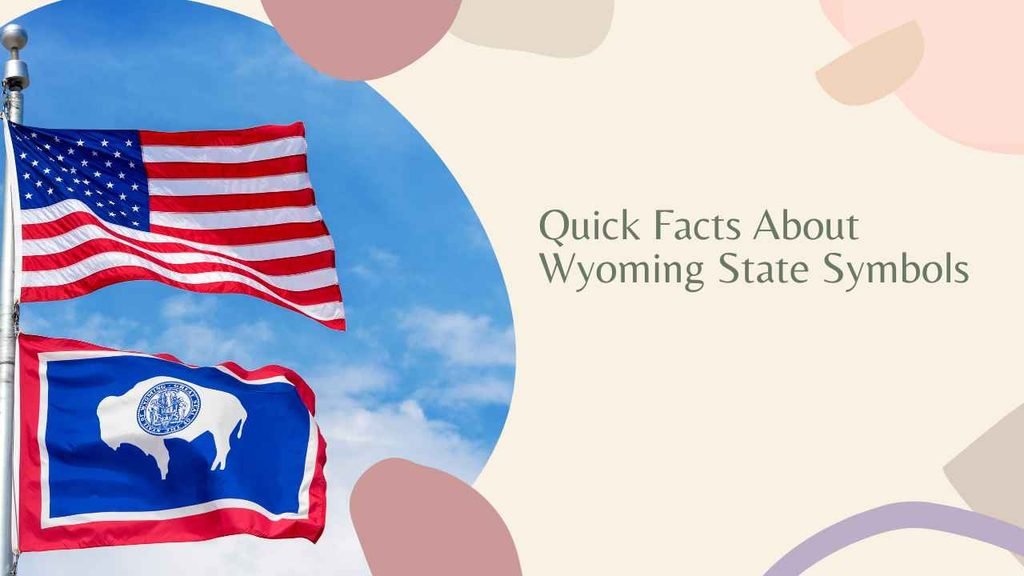
| State Flag | Wyoming State Flag |
| State Motto | Equal Rights |
| State Fossil | Knightia |
Overview of Wyoming State Symbols
State symbols serve as official representations of a state’s history, geography, culture, and values. Wyoming’s collection of symbols is particularly meaningful because many of them highlight the state’s rich wildlife and western traditions.
Wyoming became the 44th state of the United States on July 10, 1890. Since then, lawmakers have designated numerous symbols that celebrate the state’s identity. These symbols appear in classrooms, government publications, tourism campaigns, and educational materials throughout Wyoming.
Many Wyoming state symbols also reflect the state’s commitment to conservation. Yellowstone National Park, Grand Teton National Park, and millions of acres of public lands have helped preserve the species and landscapes represented by these official emblems.
The History Behind Wyoming State Symbols
The adoption of Wyoming’s official symbols happened gradually over more than a century. Some, like the state flag and motto, date back to the early 1900s, while others were added more recently to recognize unique aspects of Wyoming’s natural heritage.
Wyoming’s motto, “Equal Rights,” holds special historical significance. Wyoming Territory became the first government in the United States to grant women the right to vote in 1869, earning its nickname, the Equality State.
Over time, legislators sought to preserve and promote Wyoming’s identity by officially recognizing symbols connected to Native American traditions, western ranching, fossil discoveries, and native wildlife.
Today, Wyoming has one of the most distinctive collections of state symbols in America, many of which are instantly recognizable to residents and visitors alike.
Major Wyoming State Symbols Explained
State Flag
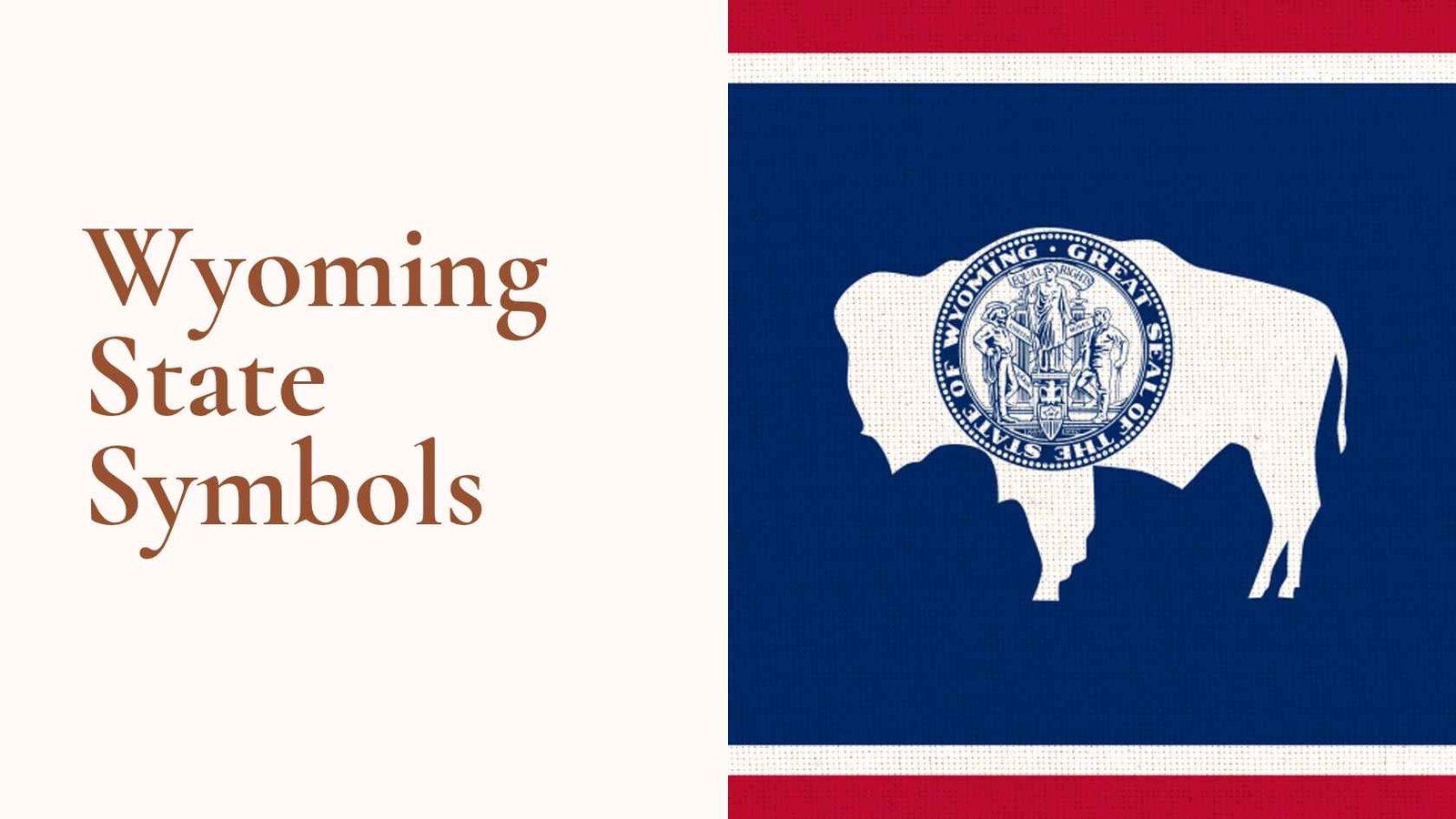
Wyoming’s flag features a white bison silhouette on a blue field bordered in white and red. Inside the bison appears the state seal.
The design symbolizes purity (white), justice and perseverance (blue), and the sacrifices of citizens (red). The bison reflects Wyoming’s wildlife heritage and the importance of the American West.
State Motto: Equal Rights
Adopted in 1957, “Equal Rights” honors Wyoming’s pioneering role in women’s suffrage. Wyoming granted women voting rights decades before the 19th Amendment became part of the U.S. Constitution.
State Animal: American Bison
The American bison symbolizes strength, endurance, and the untamed spirit of the West. Once nearly extinct, bison populations have recovered significantly thanks to conservation efforts.
State Bird: Western Meadowlark
Known for its melodic song, the Western Meadowlark is commonly found across Wyoming’s grasslands and agricultural regions.
State Flower: Indian Paintbrush
This vibrant red wildflower grows throughout Wyoming’s landscapes and is among the most photographed native plants in the state.
State Dinosaur: Triceratops
Wyoming is one of the richest fossil-producing states in America. The Triceratops, famous for its three horns and large frill, represents Wyoming’s extraordinary prehistoric history.
Wyoming State Symbols and Their Meanings
Wyoming has several official state symbols that represent its natural beauty, history, wildlife, and cultural identity. From the state flower and bird to its famous bison and cottonwood tree, each symbol reflects something special about the Cowboy State. These symbols help tell the story of Wyoming and show what makes it unique among other U.S. states.
Many of Wyoming’s symbols were officially adopted to recognize the plants, animals, and traditions that have played an important role in the state’s history. Some represent its wide-open landscapes, while others reflect its connection to ranching, wildlife, and western heritage. Learning about Wyoming state symbols and their meanings is a great way to understand the state’s character and traditions.
Wyoming State Flower: Indian Paintbrush
The Indian paintbrush is the official state flower of Wyoming. Known for its bright red and orange colors, this beautiful wildflower adds a splash of color to the state’s open fields and mountain landscapes. It was officially adopted as Wyoming’s state flower on January 31, 1917, and has remained one of the state’s most recognizable natural symbols.
The flower represents the natural beauty and colorful landscapes of Wyoming. Its striking appearance makes it easy to recognize, especially during the warmer months when wildflowers bloom across the region. The Indian paintbrush is also a reminder of the diverse plant life found throughout the western United States.
List of Wyoming State Symbols
Wyoming has a wide range of official state symbols, including plants, animals, birds, minerals, and other items that reflect its heritage. Some of the best-known examples include the Indian paintbrush as the state flower, the western meadowlark as the state bird, the plains cottonwood as the state tree, and the American bison as the state mammal.
Other official symbols include jade as the state gemstone, the cutthroat trout as the state fish, Knightia as the state fossil, and the horned toad as the state reptile. Together, these symbols highlight Wyoming’s natural resources, wildlife, and history. They also give residents and visitors a better understanding of what makes the state special.
Wyoming State Tree: Plains Cottonwood
The plains cottonwood is the official state tree of Wyoming. This large, fast-growing tree is commonly found near rivers, streams, and other water sources across the Great Plains and western regions. Wyoming officially adopted the cottonwood as its state tree on February 1, 1947, with a later amendment in 1961.
The plains cottonwood is an important part of Wyoming’s natural environment because it provides shade, shelter, and habitat for wildlife. Its broad branches and distinctive leaves make it easy to spot in open landscapes. The tree also represents the connection between Wyoming’s natural scenery and the water sources that support life across the state.
Wyoming State Bird: Western Meadowlark
The western meadowlark is the official state bird of Wyoming. It is known for its bright yellow chest, black V-shaped marking, and beautiful, flute-like song. The bird was officially selected as Wyoming’s state bird on February 5, 1927, and is commonly seen in grasslands, open fields, and prairie habitats.
The western meadowlark represents the open landscapes and natural wildlife of Wyoming. Its cheerful song is often heard across the state’s countryside, making it a familiar part of rural life. Because it thrives in grassy habitats, the bird also reflects the importance of Wyoming’s wide-open plains and natural environment.
Wyoming State Animal: American Bison
The American bison is Wyoming’s official state mammal and one of the most recognizable animals associated with the American West. Known for its large body, thick brown coat, and distinctive shoulder hump, the bison has a long history in the Great Plains. Wyoming officially adopted it as the state mammal on February 23, 1985.
The bison represents strength, endurance, and Wyoming’s western heritage. It also has an important connection to the state’s wildlife and conservation history. Today, bison remain an important symbol of the American West and can be seen in protected areas and wildlife habitats across the region.
New Mexico State Symbols
New Mexico, another state in the American Southwest, has its own collection of official symbols that reflect its landscapes, wildlife, and cultural traditions. Its state bird is the roadrunner, its state flower is the yucca, and its state tree is the piñon pine. These symbols represent the state’s desert environment and distinctive natural beauty.
Like Wyoming, New Mexico uses its state symbols to celebrate its identity and natural heritage. While Wyoming is strongly associated with the bison, meadowlark, and Indian paintbrush, New Mexico is known for symbols that reflect its dry climate and southwestern landscapes. Comparing the two states shows how different regions of the United States have their own unique natural and cultural identities.
Unique State Symbols Across the United States
Every U.S. state has official symbols that reflect its history, environment, and traditions. Some states choose colorful flowers, while others recognize native birds, wildlife, trees, fish, or even fossils. These symbols are more than official names; they help people understand the natural resources and cultural heritage that make each state different.
Wyoming’s Indian paintbrush, plains cottonwood, western meadowlark, and American bison are good examples of symbols connected to its western landscapes. Other states have equally interesting choices, such as New Mexico’s roadrunner and yucca. Exploring these unique state symbols is a fun way to learn about the geography, wildlife, and history of the United States.
Geography and Natural Significance
Wyoming’s geography plays a major role in its official symbols. The state contains:
- Yellowstone National Park
- Grand Teton National Park
- The Rocky Mountains
- High plains and grasslands
- Extensive fossil beds
- Major river systems
These diverse environments support countless species, many of which have become official symbols. Wyoming’s relatively low population density has also helped preserve its natural beauty.
The state’s landscapes influence everything from its flower and bird to its gemstone and fossil, making Wyoming’s symbols deeply connected to the land itself.
20 Interesting Facts About Wyoming State Symbols
1. Wyoming Was the First State to Honor Women’s Rights
The state motto, “Equal Rights,” celebrates Wyoming’s decision to allow women to vote in 1869. This happened more than 50 years before women gained voting rights nationwide.
It remains one of Wyoming’s proudest achievements and continues to define the state’s identity.
2. The State Flag Features a Real Wyoming Icon
The bison on Wyoming’s flag is not random. Millions of bison once roamed the Great Plains, including Wyoming.
Today, Yellowstone hosts one of the oldest and most genetically important wild bison herds in North America.
3. Indian Paintbrush Isn’t Always Red
Although commonly seen in bright red, Indian Paintbrush can also appear in orange, pink, and yellow shades.
Its colorful appearance makes it one of Wyoming’s most recognizable wildflowers.
4. Triceratops Fossils Are Frequently Found in Wyoming
Paleontologists have discovered numerous Triceratops specimens across the state.
These discoveries continue to attract scientists and dinosaur enthusiasts from around the world.
5. Wyoming’s State Song Was Written Over a Century Ago
The official song, “Wyoming,” was composed in 1903 and remains an important part of state ceremonies.
Its lyrics celebrate the state’s landscapes and western heritage.
6. The Western Meadowlark Is Known for Its Beautiful Voice
Birdwatchers often describe the Western Meadowlark as one of North America’s finest songbirds.
Its distinctive melodies can be heard across Wyoming’s open countryside.
7. Wyoming Jade Is Highly Valued
Wyoming is one of the few places in the United States where high-quality jade is found.
Collectors prize Wyoming jade for its rich green color and durability.
8. Rodeo Is Wyoming’s Official State Sport
Given Wyoming’s ranching traditions, rodeo was an obvious choice.
Events such as bull riding and barrel racing continue to draw large crowds throughout the state.
9. The Plains Cottonwood Thrives in Harsh Conditions
Wyoming’s state tree can survive drought, wind, and extreme temperatures.
Its resilience mirrors the determination often associated with Wyoming residents.
10. Sheridan’s Green Hairstreak Is Extremely Small
Wyoming’s official insect measures less than an inch across.
Despite its size, it plays an important role in local ecosystems as a pollinator.
11. The State Seal Includes Symbols of Industry
Wyoming’s seal features mining, agriculture, and livestock imagery.
These industries have long shaped the state’s economy and culture.
12. Knightia Fossils Are Exceptionally Well Preserved
Knightia, Wyoming’s official fossil, is an ancient fish species found in remarkable detail.
Many specimens still display individual scales millions of years after their existence.
13. Yellowstone Helped Preserve Several State Symbols
Yellowstone National Park provides habitat for bison, trout, and countless bird species.
Without conservation efforts, some of Wyoming’s symbols might be far less common today.
14. Wyoming Has More Wildlife Than People in Some Areas
Certain regions of Wyoming support larger animal populations than human populations.
This unique characteristic helps explain why wildlife plays such an important role in state symbolism.
15. The Cutthroat Trout Has Distinctive Markings
Wyoming’s state fish is easily recognized by the red markings beneath its jaw.
It is a favorite among anglers and conservationists alike.
16. The State Nickname Reflects National History
“The Equality State” isn’t merely a slogan—it represents Wyoming’s lasting impact on American democracy.
Many historians consider it one of the most meaningful state nicknames in the country.
17. Wyoming’s Symbols Span Millions of Years
From Triceratops and Knightia fossils to modern wildlife, Wyoming’s symbols cover an enormous timeline.
Few states have official emblems representing both prehistoric and contemporary life so effectively.
18. Schoolchildren Helped Select Some Symbols
Public support and educational campaigns have influenced several symbol designations over the years.
This involvement strengthens community connections to Wyoming’s heritage.
19. Bison Once Faced Near Extinction
By the late 1800s, fewer than 1,000 bison remained in North America.
Conservation efforts helped restore populations, making the bison a symbol of recovery and resilience.
20. Wyoming Continues to Add New Symbols
State legislatures occasionally consider additional symbols that better represent Wyoming’s evolving identity.
This means the story of Wyoming state symbols is still being written today.
Culture and Traditions Connected to Wyoming State Symbols
Wyoming’s symbols are deeply woven into everyday life. Schools teach students about the state bird and flower, while tourism campaigns prominently feature the bison and Wyoming flag.
Annual rodeos, county fairs, and western festivals celebrate traditions represented by official symbols. Native American communities also contribute significantly to Wyoming’s cultural identity, preserving customs that predate statehood.
Western values such as independence, self-reliance, and respect for nature continue to influence how Wyoming residents view their state symbols.
Famous Places Associated With Wyoming State Symbols
Yellowstone National Park
Yellowstone is closely linked with the American bison, cutthroat trout, and countless native species.
Grand Teton National Park
This park showcases Wyoming’s stunning mountain landscapes and diverse wildlife.
Fossil Butte National Monument
Fossil Butte preserves some of the world’s best fossil deposits, including Knightia specimens.
Cheyenne
Wyoming’s capital hosts major rodeo events and historical exhibits related to state symbols.
Cody
Founded by Buffalo Bill Cody, this city celebrates Wyoming’s western heritage through museums and cultural events.
Economic and Modern Importance

Wyoming state symbols contribute significantly to tourism and education. Millions of visitors travel to Wyoming annually to experience its wildlife, parks, and western culture.
Tourism generates billions of dollars in economic activity, while symbols like the bison and rodeo serve as powerful branding tools for the state.
Educational institutions also use state symbols to teach history, conservation, biology, and civic pride. As environmental awareness grows, many of Wyoming’s symbols have become important reminders of the need to protect natural resources for future generations.
Frequently Asked Questions
What is Wyoming’s official state animal?
Wyoming’s official state animal is the American bison, chosen for its historical and cultural significance throughout the American West.
What is Wyoming’s state flower?
The Indian Paintbrush is Wyoming’s official state flower and is known for its bright red blooms.
Why is Wyoming called the Equality State?
Wyoming earned the nickname because it granted women the right to vote in 1869, making it a national leader in equal rights.
What is Wyoming’s state dinosaur?
Triceratops is Wyoming’s official state dinosaur due to the state’s rich fossil history.
What is Wyoming’s official state sport?
Rodeo is Wyoming’s official state sport and reflects the state’s ranching and cowboy traditions.
What is Wyoming’s state bird?
The Western Meadowlark is Wyoming’s state bird and is famous for its beautiful song.
What is Wyoming’s state gemstone?
Wyoming jade is the official state gemstone and is prized for its quality and distinctive green color.
Conclusion
Wyoming state symbols offer a fascinating window into the history, culture, and natural beauty of the Equality State. From the powerful American bison and colorful Indian Paintbrush to the ancient Triceratops and enduring motto “Equal Rights,” each symbol tells an important story.
Together, these official emblems celebrate Wyoming’s western heritage, commitment to conservation, and pioneering spirit. They remind us that state symbols are more than ceremonial designations—they are living connections to the people, landscapes, and traditions that continue to shape Wyoming today.

I’m Sophia Bennett, and I have a passion for uncovering the meaning behind symbols used throughout history and across different cultures. I love researching mythology, nature, dreams, and spiritual traditions to explain how symbols shape our understanding of the world.
Writing for Symbolory allows me to share reliable, easy-to-read information that helps readers connect with the stories behind every symbol. My mission is to make symbolism interesting, practical, and accessible for everyone.
Books
- The World of Symbol Meanings
- Sacred Symbols and Modern Interpretations