Peru is a country where ancient civilizations, breathtaking landscapes, and living traditions come together in remarkable ways. From the towering Andes Mountains to the mysteries of Machu Picchu, Peru’s identity is deeply connected to its symbols. These symbols are more than decorative images—they tell stories of the Inca Empire, indigenous beliefs, national pride, and centuries of cultural evolution.
Peruvian symbols can be found everywhere: on the national flag, in traditional textiles, in ancient temples, and even in everyday celebrations. Whether you’re planning a trip to Peru, studying South American history, or simply exploring world cultures, understanding these symbols offers a deeper appreciation of one of the world’s richest cultural landscapes.
This guide explores the most important Peruvian symbols, their meanings, historical significance, and the role they continue to play in modern Peru.
Quick Facts About Peruvian Symbols
| Feature | Details |
| Country | Peru |
| Continent | South America |
| Ancient Civilization | Inca Empire |
| Official National Symbols | Flag, Coat of Arms, National Anthem |
| Famous Cultural Symbols | Chakana, Condor, Llama, Sun of the Incas |
| UNESCO Sites | Machu Picchu, Cusco, Nazca Lines |
| Main Cultural Influences | Inca, Quechua, Spanish, Indigenous |
| National Animal | Vicuña |
| National Flower | Cantuta |
| National Tree | Cinchona Tree |
| Most Recognized Symbol | Machu Picchu and the Chakana |
What Are Peruvian Symbols?
Peruvian symbols are visual representations of the country’s history, culture, spirituality, and identity. Some are officially recognized by the government, while others have been passed down through indigenous communities for centuries.
Many symbols originate from the Inca civilization, which ruled much of western South America before the arrival of the Spanish in the 16th century. These symbols often represent harmony with nature, the cosmos, and the interconnectedness of life.
Today, Peruvian symbols appear in:
- Traditional clothing
- Government emblems
- Festivals and ceremonies
- Art and handicrafts
- Tourism materials
- Jewelry and tattoos
- Architecture and monuments
History of Peruvian Symbols
The origins of Peruvian symbols date back thousands of years. Long before the Incas, civilizations such as the Chavín, Moche, Nazca, and Wari developed symbolic art and religious imagery.
The Inca Empire (1438–1533) expanded these traditions, introducing symbols associated with the sun, animals, and sacred geometry. The Incas viewed the natural world as sacred, which is why many Peruvian symbols are connected to mountains, birds, and celestial bodies.
After Spanish colonization, Catholic influences merged with indigenous traditions. This blending created unique cultural expressions that remain visible in Peru today.
Modern Peru officially adopted several national symbols after gaining independence in 1821, while ancient symbols continue to be celebrated by indigenous communities throughout the country.
The Most Important Peruvian Symbols
The Chakana (Inca Cross)
The Chakana, also known as the Inca Cross, is perhaps the most spiritually significant symbol in Peru.
It features a stepped cross design representing the connection between:
- The upper world (Hanan Pacha)
- The earthly world (Kay Pacha)
- The underworld (Ukhu Pacha)
The Chakana symbolizes balance, unity, and the relationship between humanity and the universe. It remains a popular symbol in Peruvian jewelry, textiles, and spiritual practices.
The Peruvian Flag
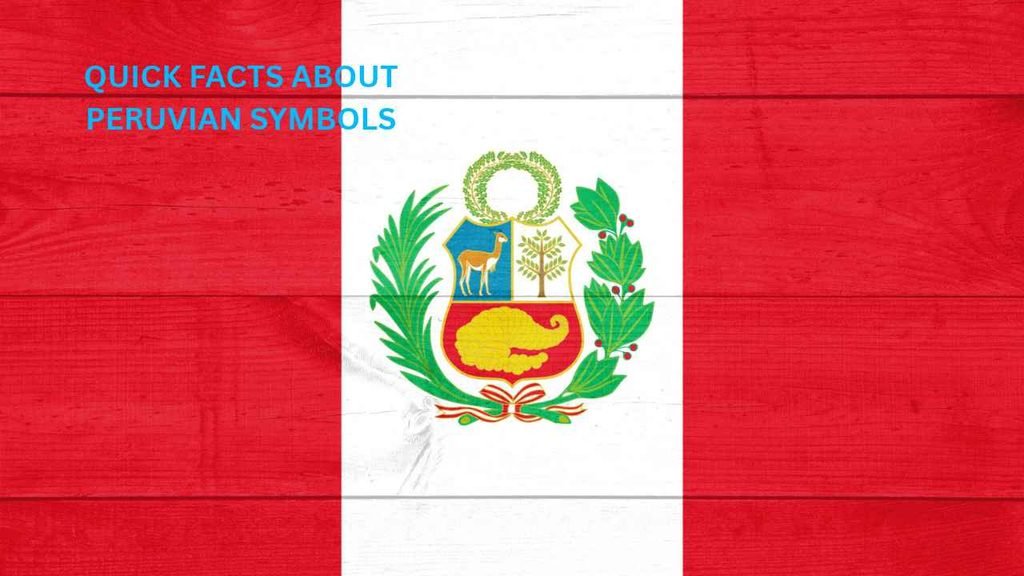
The Peruvian flag consists of three vertical stripes: red, white, and red.
Its colors traditionally represent:
- Red: The blood shed for independence.
- White: Peace and purity.
The flag was officially adopted in 1825 and is one of the country’s most recognizable national symbols.
The Coat of Arms
Peru’s coat of arms contains three important elements:
- Vicuña (representing wildlife)
- Cinchona tree (representing flora)
- Cornucopia spilling coins (representing mineral wealth)
Together, these elements symbolize Peru’s natural abundance.
The Andean Condor
The condor is one of the largest flying birds in the world and is sacred throughout the Andes.
For the Incas, it represented:
- Freedom
- Strength
- Connection with the heavens
The condor remains an important cultural icon and frequently appears in Peruvian folklore.
The Sun of the Incas
The Sun God, Inti, was among the most important deities in Inca religion.
Ancient Peruvians believed Inti:
- Gave life to the Earth
- Protected the empire
- Guided agricultural cycles
The annual Inti Raymi Festival in Cusco continues to honor this ancient tradition.
20 Interesting Facts About Peruvian Symbols
1. The Chakana Predates the Inca Empire
Archaeologists believe versions of the Chakana existed before the Incas. This makes it one of South America’s oldest spiritual symbols and demonstrates the continuity of Andean beliefs.
2. The Vicuña Appears on Peru’s Coat of Arms
The vicuña is a wild relative of the llama known for producing one of the world’s finest fibers. Its inclusion highlights Peru’s biodiversity and economic history.
3. Machu Picchu Is Considered a National Symbol
Although not officially designated, Machu Picchu represents Peru internationally. It symbolizes engineering excellence and the legacy of the Inca civilization.
4. Condors Can Live More Than 50 Years
The Andean condor is associated with wisdom and longevity. Its impressive lifespan contributed to its sacred status among indigenous peoples.
5. The Inca Worshipped the Sun
Sun worship was central to Inca life. Entire temples, including Coricancha in Cusco, were dedicated to Inti, the Sun God.
6. Peru’s National Flower Is the Cantuta
The Cantuta flower appears in many legends and ceremonies. It symbolizes beauty, unity, and the blending of cultures.
7. The Nazca Lines Are Symbolic Art
The Nazca Lines include enormous drawings of animals and geometric shapes visible from the sky. Their exact purpose remains one of archaeology’s greatest mysteries.
8. Llamas Symbolize Prosperity
For centuries, llamas provided transportation, wool, and food. They became symbols of survival and prosperity in the Andes.
9. The Cinchona Tree Changed Medicine
The bark of the cinchona tree led to the discovery of quinine, a treatment for malaria. Its impact extended far beyond Peru’s borders.
10. Inti Raymi Is Still Celebrated
Thousands gather annually in Cusco for Inti Raymi, a festival that recreates ancient Inca ceremonies and preserves cultural heritage.
11. Peru Has Multiple Sacred Mountains
Known as “Apus,” sacred mountains are believed to be living spirits that protect nearby communities. Many Peruvians continue to honor them.
12. The Inca Used Symbolic Textiles
Traditional weaving patterns often communicated family identity, social status, and regional origins.
13. The Puma Represents Strength
The city of Cusco is believed to have been designed in the shape of a puma, an animal symbolizing power and earthly life.
14. The Serpent Represents Wisdom
In Andean cosmology, the serpent symbolizes knowledge and the underworld, completing the trio of sacred animals alongside the condor and puma.
15. Peru’s National Anthem Is a Symbol of Independence
Written in the early 19th century, the anthem reflects Peru’s struggle for freedom and national identity.
16. Ancient Peruvians Used Symbolic Pottery
Moche and Nazca pottery featured intricate images depicting myths, rituals, and daily life.
17. The Andean Cross Has Astronomical Meaning
Researchers suggest the Chakana aligns with constellations visible from the Southern Hemisphere, adding another layer to its symbolism.
18. Traditional Hats Can Indicate Origin
In many Andean communities, hat styles reveal where a person comes from and even their marital status.
19. Peru Is Home to Thousands of Archaeological Sites
Each site contains unique symbols that provide insights into ancient civilizations and their beliefs.
20. Peruvian Symbols Continue to Evolve
Modern artists blend traditional symbols with contemporary designs, ensuring Peru’s cultural heritage remains alive for future generations.
Peruvian Culture and Traditions
Peruvian culture is a vibrant mix of indigenous, Spanish, African, and Asian influences.
Important traditions include:
- Inti Raymi Festival
- Día de los Muertos celebrations
- Traditional Andean music
- Quechua language preservation
- Textile weaving ceremonies
- Community farming practices
Family and community remain central values throughout Peru. In many rural areas, ancient customs continue to shape everyday life.
Traditional clothing often features symbolic embroidery inspired by animals, stars, and sacred landscapes.
Famous Peruvian Foods Connected to Cultural Identity
Food is another powerful expression of Peruvian heritage.
Ceviche
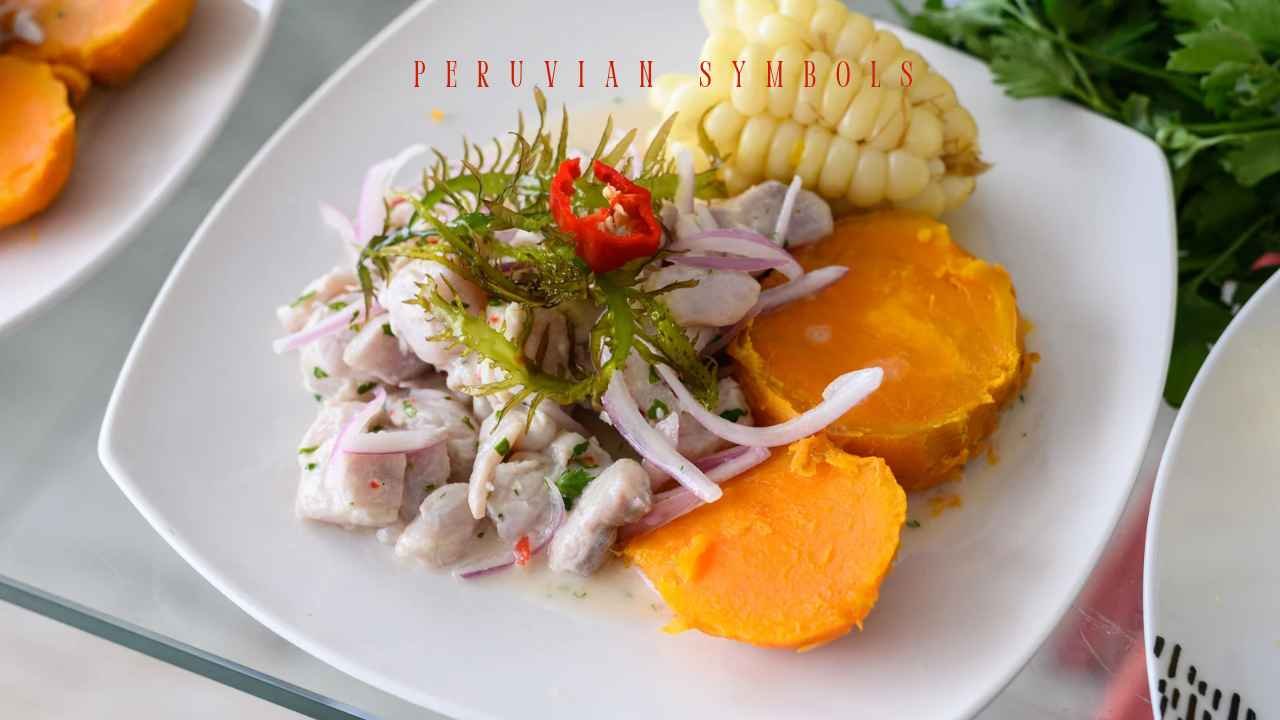
Peru’s national dish consists of fresh fish marinated in citrus juice and spices. It reflects the country’s coastal traditions.
Lomo Saltado
This popular dish combines Chinese and Peruvian culinary influences, demonstrating Peru’s multicultural history.
Cuy
Guinea pig has been consumed in the Andes for thousands of years and remains culturally significant in some regions.
Pisco
Peru’s famous grape brandy is closely tied to national celebrations and tourism.
Quinoa
Once considered sacred by the Incas, quinoa is now recognized worldwide for its nutritional value.
Famous Places Associated With Peruvian Symbols
Machu Picchu
The world’s most famous Inca site symbolizes Peru’s ancient achievements and attracts millions of visitors annually.
Cusco
The former capital of the Inca Empire remains the cultural heart of Peru.
Lake Titicaca
Known as the birthplace of the sun in Andean mythology, Lake Titicaca holds immense spiritual significance.
Nazca Desert
Home to the mysterious Nazca Lines, this region continues to fascinate historians and travelers.
Sacred Valley
Filled with ancient ruins and traditional villages, the Sacred Valley preserves many aspects of Andean culture.
The Modern Importance of Peruvian Symbols
Peruvian symbols continue to shape the nation’s identity in the 21st century.
They contribute to:
- Tourism revenue
- Cultural preservation
- Educational programs
- International recognition
- Indigenous representation
- Artistic expression
Tourism centered around Peruvian symbols supports millions of jobs and helps fund conservation efforts at archaeological sites.
Additionally, younger generations are embracing traditional symbols through fashion, digital art, and social media, ensuring these cultural icons remain relevant.
Peruvian Symbols in Art and Design
Peruvian symbols are increasingly used in:
- Home décor
- Tattoo designs
- Fashion collections
- Museum exhibitions
- Jewelry
- Branding and logos
The Chakana, condor, and sun motifs are particularly popular because they communicate themes of strength, spirituality, and heritage.
Artists often combine traditional symbolism with modern techniques, creating works that honor the past while appealing to contemporary audiences.
Frequently Asked Questions About Peruvian Symbols
What is the most important Peruvian symbol?
The Chakana, or Inca Cross, is widely considered one of Peru’s most significant cultural symbols because of its spiritual and historical importance.
What does the Peruvian flag symbolize?
The red stripes represent sacrifice and courage, while the white stripe symbolizes peace and purity.
Why is the condor important in Peru?
The condor represents freedom, power, and a connection between Earth and the heavens in Andean beliefs.
What animal symbolizes Peru?
The vicuña is Peru’s official national animal and appears on the country’s coat of arms.
What is the meaning of the Chakana?
The Chakana symbolizes the interconnectedness of the spiritual, earthly, and underworld realms in Andean cosmology.
Is Machu Picchu a symbol of Peru?
Yes. Although not an official national symbol, Machu Picchu is globally recognized as an emblem of Peru’s cultural heritage.
What are the three sacred animals of the Incas?
The condor, puma, and serpent represent the heavens, Earth, and the underworld, respectively.
Conclusion
Peruvian symbols are windows into a civilization that continues to inspire the world. From the sacred Chakana and majestic condor to Machu Picchu and the Sun God Inti, these symbols preserve stories that span thousands of years.
They remind us that Peru is more than a destination—it is a living cultural treasure shaped by history, spirituality, and resilience. Whether encountered in ancient ruins, colorful textiles, or modern art, Peruvian symbols continue to connect people with the rich heritage of the Andes.
Understanding these symbols offers not only a deeper appreciation of Peru but also a glimpse into the enduring power of culture itself.

Hi, I’m Benjamin Carter. I have spent years studying symbols from different civilizations and discovering how they influence art, religion, culture, and daily life. I enjoy turning detailed research into simple, engaging articles that anyone can understand.
I believe every symbol has a unique story, and sharing those stories is what inspires me the most. Through Symbolory, I aim to help readers explore the meanings behind famous symbols, lucky signs, spiritual icons, and historical emblems with confidence.
Books
- Symbols Across Civilizations
- The Complete Guide to Meaningful Icons
 Sophia Bennett
 Amelia Hart