Music is often called a universal language, but like every language, it has its own alphabet. From the elegant treble clef to the mysterious fermata, music signs and symbols help musicians communicate rhythm, pitch, emotion, and expression across cultures and generations.
Whether you’re learning an instrument, reading sheet music for the first time, or simply curious about the symbols you see in songs and orchestral scores, understanding music signs and symbols opens the door to a deeper appreciation of music. These markings have evolved over centuries and remain essential in everything from classical compositions to modern film scores.
Today, musical notation is used worldwide to preserve compositions exactly as their creators intended. A Beethoven symphony, a jazz arrangement, or a school choir piece all rely on the same visual language to guide performers.
Quick Facts About Music Signs and Symbols
| Feature | Details |
| Topic | Music Signs and Symbols |
| Primary Purpose | Communicate musical instructions |
| Origin | Ancient Greece and Medieval Europe |
| Common Uses | Sheet music, orchestras, choirs, music education |
| Major Categories | Clefs, notes, rests, dynamics, tempo, articulations |
| Modern Importance | Music production, education, composition |
| Universal Language | Used by musicians worldwide |
| Oldest Forms | Early neumes from the 9th century |
What Are Music Signs and Symbols?
Music signs and symbols are visual markings used in musical notation to tell performers what to play and how to play it. They provide instructions about:
- Pitch (how high or low a note is)
- Rhythm (how long a note lasts)
- Tempo (speed)
- Dynamics (volume)
- Expression (emotion and style)
- Repeats and endings
- Instrument-specific techniques
Without these symbols, musicians would have no standardized way to interpret compositions. Think of them as the punctuation marks, grammar rules, and vocabulary of music.
Today, these symbols appear in printed sheet music, digital notation software, music textbooks, and educational materials worldwide.
The History of Music Signs and Symbols
The history of musical notation stretches back more than a thousand years.
Ancient Beginnings
Ancient Greeks used letters and marks to indicate musical sounds. However, these systems were limited and varied by region.
Medieval Music
During the 9th century, monks developed “neumes,” small markings placed above text to guide singers in religious chants. Neumes eventually evolved into more precise notation.
The Development of Staff Notation
In the 11th century, Guido d’Arezzo introduced the staff system, revolutionizing music education. His innovation allowed musicians to identify exact pitches.
Renaissance and Beyond
By the Renaissance period, many familiar symbols—including clefs, note values, and rests—became standardized. Over time, composers added dynamics, articulation marks, and tempo instructions.
Modern Music Notation
Today, music notation software like Finale, Sibelius, and MuseScore uses centuries-old symbols in digital form, making composition easier than ever.
Major Categories of Music Symbols
Music signs and symbols generally fall into several categories:
Clefs
- Treble Clef
- Bass Clef
- Alto Clef
- Tenor Clef
Notes and Rests
- Whole note
- Half note
- Quarter note
- Eighth note
- Sixteenth note
Dynamics
- Piano (soft)
- Forte (loud)
- Mezzo Forte
- Crescendo
- Decrescendo
Articulations
- Staccato
- Accent
- Tenuto
- Fermata
Tempo Markings
- Largo
- Andante
- Allegro
- Presto
Repetition Symbols
- Repeat signs
- Coda
- Segno
- Da Capo
20 Interesting Facts About Music Signs and Symbols
1. The Treble Clef Has Ancient Roots
The treble clef evolved from the letter “G,” which is why it is sometimes called the G Clef. Its spiral wraps around the G line on the staff, helping musicians identify notes quickly.
2. Musical Notation Predates Modern Countries
Many music symbols existed before the formation of numerous modern nations. Medieval monks used notation systems centuries ago.
3. Guido d’Arezzo Changed Music Forever
Guido d’Arezzo’s staff notation made it possible to teach music systematically. His innovations are still used in classrooms today.
4. A Fermata Means “Hold”
A fermata symbol tells performers to sustain a note longer than written. The exact duration is often left to the conductor or musician’s interpretation.
5. Dynamics Are Usually Italian
Words like “forte” and “piano” come from Italian. Italy’s influence on classical music made Italian terminology the international standard.
6. The Bass Clef Represents F
The two dots of the bass clef surround the F line, helping musicians identify pitches on lower registers.
7. Sheet Music Is a Universal Language
A musician in Japan can perform music written by a composer in Germany without speaking the same language, thanks to standardized symbols.
8. Notes Have Mathematical Relationships
Music notation is deeply connected to mathematics. A half note lasts twice as long as a quarter note, while an eighth note lasts half as long.
9. Tempo Symbols Express Emotion
Tempo markings do more than indicate speed. “Adagio” often conveys reflection, while “Presto” creates excitement and urgency.
10. Music Symbols Continue to Evolve
Modern composers occasionally invent new symbols to indicate unconventional techniques, especially in experimental and electronic music.
11. Rests Are Just as Important as Notes
Silence plays a critical role in music. Rest symbols ensure that pauses occur exactly where intended.
12. Conductors Depend on Symbol Accuracy
In orchestras with over 100 musicians, a single incorrect marking can affect an entire performance.
13. The Sharp Symbol Has Become a Cultural Icon
The sharp sign (#) originated in music long before becoming known as the hashtag in social media culture.
14. The Flat Symbol Lowers Pitch
A flat (♭) lowers a note by one semitone, adding emotional depth and expanding musical possibilities.
15. Time Signatures Shape Musical Feel
The difference between 3/4 and 4/4 time significantly changes how listeners experience a piece.
16. Some Symbols Have Multiple Meanings
Context matters in music notation. Certain markings can have slightly different interpretations depending on the era or genre.
17. Jazz Musicians Often Use Lead Sheets
Lead sheets combine chord symbols with melodies, allowing performers greater improvisational freedom.
18. Digital Software Uses Traditional Symbols
Even AI-powered music tools rely heavily on traditional notation standards developed centuries ago.
19. Ancient Chant Influenced Modern Music
Modern notation can trace many of its principles back to Gregorian chants sung in monasteries.
20. Learning Symbols Improves Musical Literacy
Understanding music signs and symbols helps musicians sight-read faster, communicate effectively, and perform with greater confidence.
Common Music Signs and Their Meanings
Treble Clef (𝄞)
Used for higher-pitched instruments such as:
- Violin
- Flute
- Trumpet
- Right hand of piano
Bass Clef (𝄢)
Typically used for:
- Cello
- Tuba
- Bass guitar
- Left hand of piano
Sharp (♯)
Raises a note by one semitone.
Flat (♭)
Lowers a note by one semitone.
Natural (♮)
Cancels previous sharps or flats.
Fermata (𝄐)
Indicates a held note or pause.
Crescendo (<)
Signals a gradual increase in volume.
Decrescendo (>)
Indicates a gradual decrease in volume.
Repeat Sign (:||)
Tells musicians to repeat a section of music.
Coda
Directs performers to jump to a concluding section.
Music Symbols Used in Different Genres
Classical Music
Classical compositions use the most extensive range of notation symbols, including dynamics, articulations, and expressive instructions.
Jazz
Jazz notation often includes:
- Chord symbols
- Improvisation markings
- Swing indications
Pop Music
Pop arrangements are generally simpler and focus on melody, lyrics, and chord structures.
Film Scores
Film composers use extensive notation to synchronize music with visual storytelling.
Contemporary Music
Modern composers frequently blend traditional notation with custom symbols to create unique sounds.
Why Music Signs and Symbols Matter Today
Music symbols remain incredibly relevant despite advances in technology.
They help:
- Preserve musical history
- Teach students worldwide
- Ensure accurate performances
- Facilitate collaboration
- Support digital music production
- Maintain consistency across genres
Without standardized notation, orchestras, bands, and choirs would struggle to perform complex works consistently.
Music Signs and Symbols in Education
Music educators introduce notation early because it develops several important skills:
- Pattern recognition
- Memory
- Listening ability
- Coordination
- Mathematical thinking
- Creative expression
Studies have consistently shown that learning music can support broader cognitive development, making musical literacy valuable beyond performance itself.
Cultural Importance of Musical Symbols
Music symbols connect generations of musicians across cultures. While instruments and styles vary around the world, notation provides a shared framework.
Western notation is the most widespread system globally, but many cultures also maintain unique traditions:
- Indian classical notation
- Chinese jianpu notation
- Byzantine notation
- Arabic music notation
These systems demonstrate humanity’s long-standing desire to record and preserve music.
The Modern Impact of Music Notation
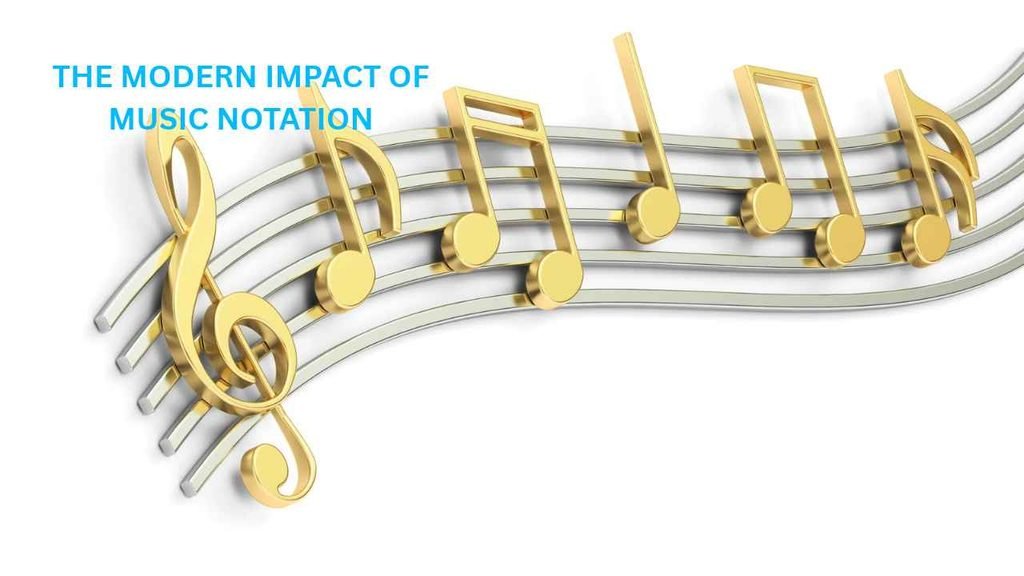
The music industry continues to depend on notation in several ways:
- Music publishing
- Film and television scoring
- Video game soundtracks
- Music education
- Orchestra performances
- Digital composition software
Streaming may dominate music consumption, but notation remains the foundation of music creation and preservation.
Frequently Asked Questions
What are the main music signs and symbols?
The main music symbols include clefs, notes, rests, sharps, flats, time signatures, dynamics, and articulation marks.
Why are music symbols important?
They provide musicians with instructions about pitch, rhythm, tempo, volume, and expression, ensuring accurate performances.
What does the treble clef symbol mean?
The treble clef identifies the G line on the staff and is commonly used for higher-pitched instruments and voices.
Which language is used for music symbols?
Most dynamic and tempo markings come from Italian, including terms like Allegro, Forte, and Piano.
Who invented modern music notation?
Guido d’Arezzo is widely credited with developing the staff notation system used in Western music.
Are music symbols the same worldwide?
Western notation is internationally recognized, but many cultures also use their own notation systems alongside it.
Is learning music notation difficult?
No. Beginners can learn basic symbols within a few weeks, while mastering advanced notation takes time and practice.
Conclusion
Music signs and symbols are much more than markings on a page—they are the foundation of one of humanity’s greatest forms of expression. From ancient chants to modern digital compositions, these symbols have enabled musicians to share ideas across centuries and continents.
Understanding musical notation not only improves performance skills but also deepens appreciation for the art itself. Whether you’re a student, teacher, performer, or curious listener, learning the meanings behind these symbols offers a fascinating glimpse into the language of music.

I’m Sophia Bennett, and I have a passion for uncovering the meaning behind symbols used throughout history and across different cultures. I love researching mythology, nature, dreams, and spiritual traditions to explain how symbols shape our understanding of the world.
Writing for Symbolory allows me to share reliable, easy-to-read information that helps readers connect with the stories behind every symbol. My mission is to make symbolism interesting, practical, and accessible for everyone.
Books
- The World of Symbol Meanings
- Sacred Symbols and Modern Interpretations
 Amelia Hart